Automated Groundskeeping for Hotels and Resorts: Where Robotic Mowing Fits Into Landscape Operations
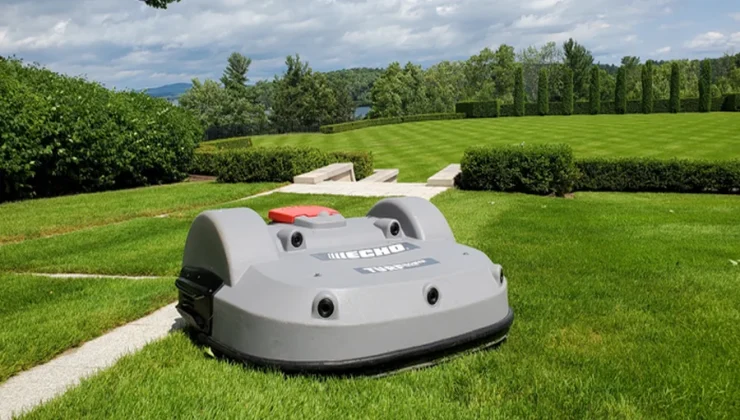
Hotels and resorts maintain outdoor environments that influence guest experiences long before visitors enter the lobby. Carefully maintained lawns, landscaped pathways, poolside gardens, and open recreational spaces contribute to the property’s overall appearance. However, keeping these areas consistently maintained requires considerable labor, careful scheduling, and equipment management. As hospitality operators look for more efficient maintenance strategies, robotic mowers are becoming a practical addition to professional groundskeeping operations.
Unlike conventional mowing equipment, autonomous lawn maintenance systems can handle designated mowing areas according to programmed schedules. Exploring how robotic mowers fit into hospitality landscaping reveals an important operational opportunity: routine lawn maintenance can become more predictable without requiring staff to dedicate every working hour to repetitive mowing tasks.
1. Why Hotel and Resort Landscaping Requires a Different Maintenance Strategy
Residential lawn maintenance and hospitality groundskeeping have different operational demands. A homeowner may tolerate temporary variations in lawn appearance, but hotels must maintain consistent outdoor presentation throughout the week.
Resorts often manage multiple landscape zones, including:
- Entrance lawns and guest arrival areas.
- Decorative grass surrounding swimming pools.
- Large open spaces near accommodation buildings.
- Event lawns and outdoor dining areas.
- Recreational spaces and walking paths.
Each area has different maintenance requirements. An entrance lawn may need frequent attention because every arriving guest sees it, while a less visible perimeter area can follow a different schedule.
This creates a coordination challenge for landscape managers. They must balance mowing frequency, labor availability, equipment use, and guest activities without disrupting the property’s daily operations.
2. How Robotic Mowers Support More Consistent Grounds Maintenance
Robotic mowing systems operate autonomously within designated areas, following programmed schedules and navigation instructions. Once properly configured, they can perform routine grass cutting with limited direct supervision.
Their main operational advantage is consistency. Instead of waiting for a groundskeeping employee to become available, a suitable robotic unit can maintain its assigned lawn according to a planned schedule.
For example, a resort with several separate lawn sections could assign autonomous mowing to broad, relatively unobstructed areas. Maintenance staff could then concentrate on detailed trimming, edging, pruning, irrigation inspections, and landscape repairs.
This division of responsibilities makes automation more useful than simply replacing one mowing machine with another.
3. Identifying the Best Areas for Autonomous Lawn Care
Not every landscaped area is suitable for robotic mowing. Successful implementation begins with identifying locations where autonomous equipment can operate safely and efficiently.
Open Lawns and Low-Traffic Green Spaces
Large grass areas with relatively straightforward boundaries are often strong candidates. These spaces generally require repetitive maintenance but involve fewer obstacles than decorative gardens.
Landscaped Areas Between Buildings
Some hotels have smaller grass sections surrounding accommodation blocks or administrative buildings. These areas may also be suitable when access routes and operating boundaries are properly established.
Perimeter and Secondary Grounds
Less prominent lawn sections can benefit from scheduled maintenance because they are sometimes overlooked when staff prioritize guest-facing spaces.
However, steep slopes, narrow passages, uneven terrain, water features, and heavily obstructed gardens require careful assessment before automation is introduced.
4. Balancing Guest Experience With Automated Mowing Schedules
One of the most important considerations in hospitality landscaping is noise and movement around guests.
Traditional mowing frequently requires staff to work during specific daytime windows. This can create conflicts with outdoor dining, wedding ceremonies, poolside relaxation, and recreational activities.
Autonomous mowing introduces greater scheduling flexibility, although it does not eliminate the need for operational planning.
A resort might establish the following approach:
- Schedule mowing in low-occupancy periods.
- Avoid active event lawns during weddings and private functions.
- Restrict operation near swimming pools when guest activity is high.
- Coordinate mowing around housekeeping and landscaping work.
- Establish no-operation periods around sensitive guest areas.
Managers should also consider local noise restrictions, manufacturer operating recommendations, and the property’s security requirements.
The objective is not to operate equipment continuously. It is to maintain grass consistently while keeping the guest environment undisturbed.
5. Comparing Robotic Mowing With Conventional Groundskeeping
The decision to introduce autonomous equipment should be based on operational suitability rather than technology trends.
| Consideration | Conventional mowing | Robotic mowing |
| Labor requirements | Direct operator involvement | Limited routine supervision |
| Scheduling | Depends on staff availability | Programmable operating schedules |
| Lawn maintenance | Periodic cutting sessions | Frequent scheduled cutting |
| Large open spaces | Effective with suitable equipment | Depends on capacity and terrain |
| Complex landscaping | Greater operator control | Requires careful boundary planning |
| Detailed finishing | Suitable with appropriate attachments | Usually requires supplementary work |
Conventional equipment remains valuable for tall grass, overgrown areas, difficult terrain, and detailed finishing.
Robotic systems are generally better suited to maintaining established lawns through regular cutting. They are not designed to replace every landscaping task.
For many hospitality properties, a hybrid arrangement offers the most practical solution.
6. How to Introduce Robotic Mowing Into Existing Landscape Operations
A successful transition requires more than purchasing autonomous equipment. Grounds managers should treat implementation as an operational project.
Step 1: Conduct a landscape assessment.
Measure lawn areas, identify obstacles, evaluate slopes, and examine access points. Record locations where guests, staff, service vehicles, and maintenance equipment regularly move.
Step 2: Divide the property into maintenance zones.
Separate high-visibility lawns from secondary grass areas, event spaces, and difficult terrain. This makes it easier to determine where autonomous mowing offers genuine value.
Step 3: Evaluate equipment capabilities.
Review navigation technology, cutting capacity, slope limitations, obstacle detection, boundary management, charging arrangements, and weather-related operating restrictions.
Step 4: Start with a controlled pilot.
Introduce one unit in a relatively straightforward lawn section. Monitor cutting consistency, operating interruptions, staff requirements, and guest feedback before expanding the program.
Step 5: Establish maintenance responsibilities.
Assign employees to inspect equipment, maintain cutting components, clear debris, review operating schedules, and respond to system alerts.
A pilot period of several weeks can reveal practical limitations that may not be apparent during an initial equipment demonstration.
7. Measuring Operational Benefits Beyond Reduced Mowing Time
Labor savings are an obvious consideration, but hospitality managers should evaluate automation through a wider operational framework.
Useful performance indicators include:
- Maintenance hours: Staff time required for routine mowing compared with the previous schedule.
- Lawn consistency: Whether designated areas maintain an acceptable and uniform appearance.
- Equipment downtime: Frequency of interruptions, charging issues, or maintenance requirements.
- Operating costs: Electricity, servicing, replacement components, and equipment investment.
- Guest disruption: Complaints or interruptions associated with groundskeeping activities.
Another useful measurement is the amount of staff time redirected toward higher-value landscaping tasks.
For example, if employees spend fewer hours mowing open lawns, they may have more time to inspect irrigation systems, repair damaged turf, maintain flowerbeds, and prepare outdoor event spaces.
This broader perspective helps managers determine whether automation improves the overall quality of landscape operations rather than simply changing how grass is cut.
8. Common Mistakes Hotels Should Avoid When Adopting Lawn Automation
Even capable autonomous equipment can produce disappointing results when implementation decisions are rushed.
Several mistakes deserve particular attention.
Assuming every lawn is suitable: Complex landscaping, narrow passages, steep slopes, and frequently changing layouts may create operational difficulties.
Ignoring guest movement: Equipment schedules must account for pedestrian traffic, service vehicles, outdoor events, and restricted areas.
Expecting complete labor replacement: Robotic mowing does not eliminate edging, pruning, debris removal, irrigation management, or landscape inspections.
Neglecting routine servicing: Cutting blades, sensors, charging stations, and navigation systems require regular attention.
Overlooking weather conditions: Wet grass, heavy rain, and other environmental conditions can affect cutting quality and equipment performance.
The strongest implementations recognize these limitations early and build realistic maintenance procedures around them.
9. Frequently Asked Questions About Robotic Mowing in Hospitality Properties
Can robotic mowers maintain large hotel lawns?
Yes, depending on the equipment’s rated coverage capacity, terrain, operating schedule, and lawn layout. Larger properties may require multiple units or a combination of autonomous and conventional equipment.
Are robotic mowers suitable for resorts with frequent guest activity?
They can be suitable when operating zones, schedules, and safety measures are carefully planned. High-traffic guest areas may require restricted operating windows or conventional maintenance.
Do robotic mowers eliminate the need for landscaping employees?
No. They primarily automate repetitive grass cutting. Employees remain essential for landscape inspections, edging, pruning, repairs, equipment servicing, and other groundskeeping responsibilities.
How should a hotel evaluate whether robotic mowing is worthwhile?
Managers should compare equipment investment and operating costs against labor requirements, maintenance consistency, equipment downtime, and the value of staff time redirected to other landscaping tasks.
Conclusion: Making Automation Part of a Better Groundskeeping Strategy
Automated groundskeeping is most effective when it supports an organized landscape management strategy rather than functioning as an isolated technology investment. For hotels and resorts, robotic mowing can improve the consistency of routine lawn maintenance while allowing employees to focus on detailed landscaping and guest-facing responsibilities.
The best starting point is to identify suitable lawn areas, evaluate operating conditions, and introduce automation through a controlled pilot. With appropriate scheduling, supervision, and maintenance procedures, autonomous mowing can become a dependable part of hospitality property management.
As resort landscapes become more complex and expectations for outdoor presentation remain high, integrating automation thoughtfully offers a practical way to improve how groundskeeping teams manage their time and resources.